Compression and Rebound: What Each Adjuster Actually Does
"I turned the adjuster and nothing changed" almost always means the wrong adjuster was turned for the wrong symptom. Compression and rebound don't control the same thing, and they don't even act at the same moment in the suspension's movement.
Compression: when the suspension compresses
The compression adjuster controls how quickly the suspension can dive — when you hit a pothole, when you brake hard and weight shifts forward, when you land off a bump. Closing it (stiffer) slows the dive: the suspension absorbs the hit less readily but resists bottoming out more. Opening it (softer) lets it dive more freely.
Rebound: when the suspension comes back
The rebound adjuster controls how quickly the suspension returns to full extension after compressing. The trade-off here is more delicate than it looks: rebound too fast (open) makes the bike "bounce" after every bump, with the wheel struggling to stay in contact with the tarmac over closely spaced imperfections. Rebound too slow (closed) does the exact opposite: the suspension doesn't have time to get back into position before the next hit, and over a series of close bumps it ends up "packing down", sinking further with each one because it never gets the chance to recover its travel.
Why it's easy to mix them up
The symptom "the bike skips over bumps" can come from either adjuster, but for opposite reasons: rebound too fast (bounces) or too slow (packs down and bottoms out). Turning the wrong adjuster in the wrong direction makes the problem worse instead of better — which is exactly why it matters to change one click at a time and watch what happens, rather than turning both adjusters together and hoping to get lucky.
Something the numbers don't tell you
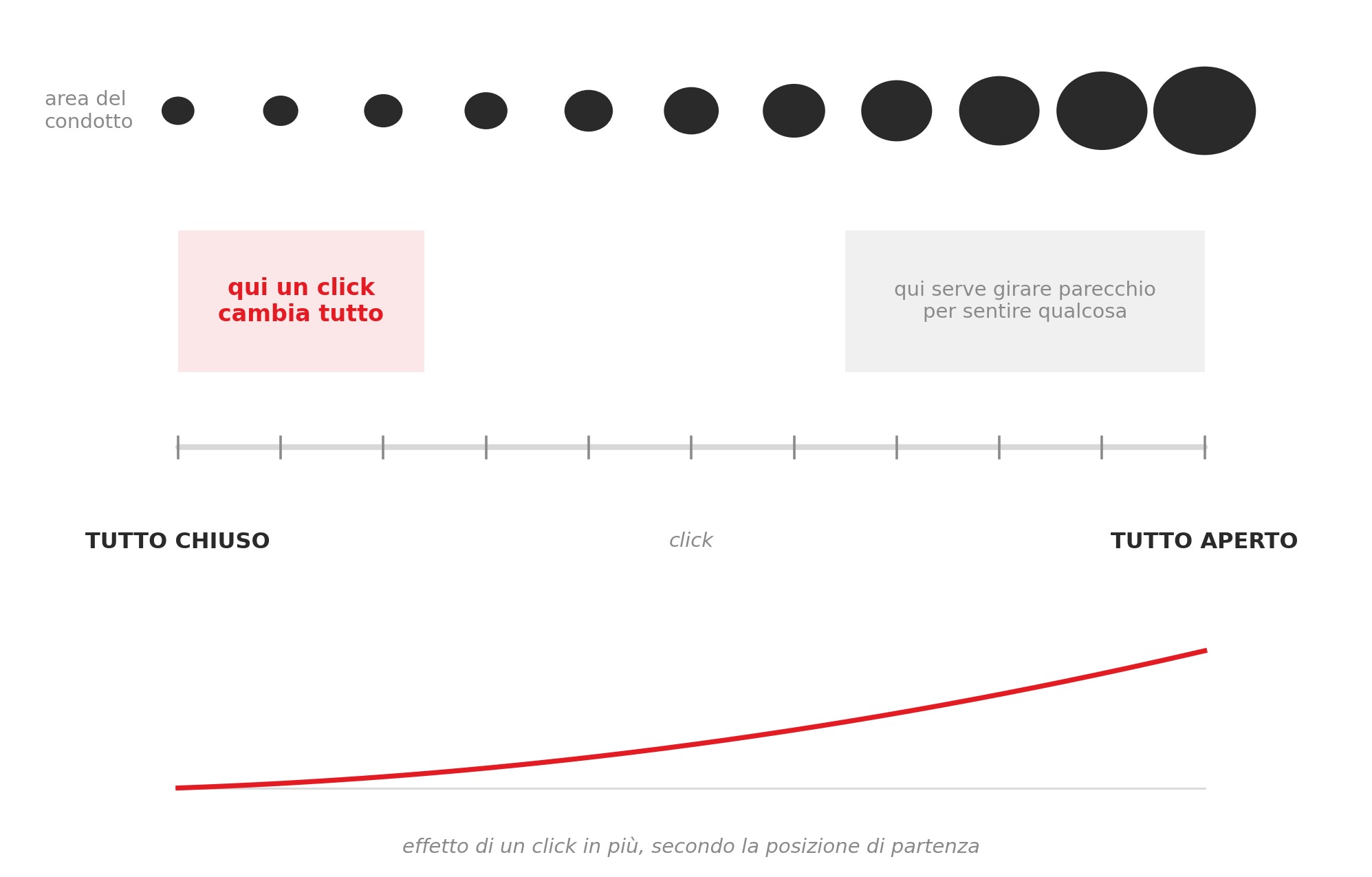
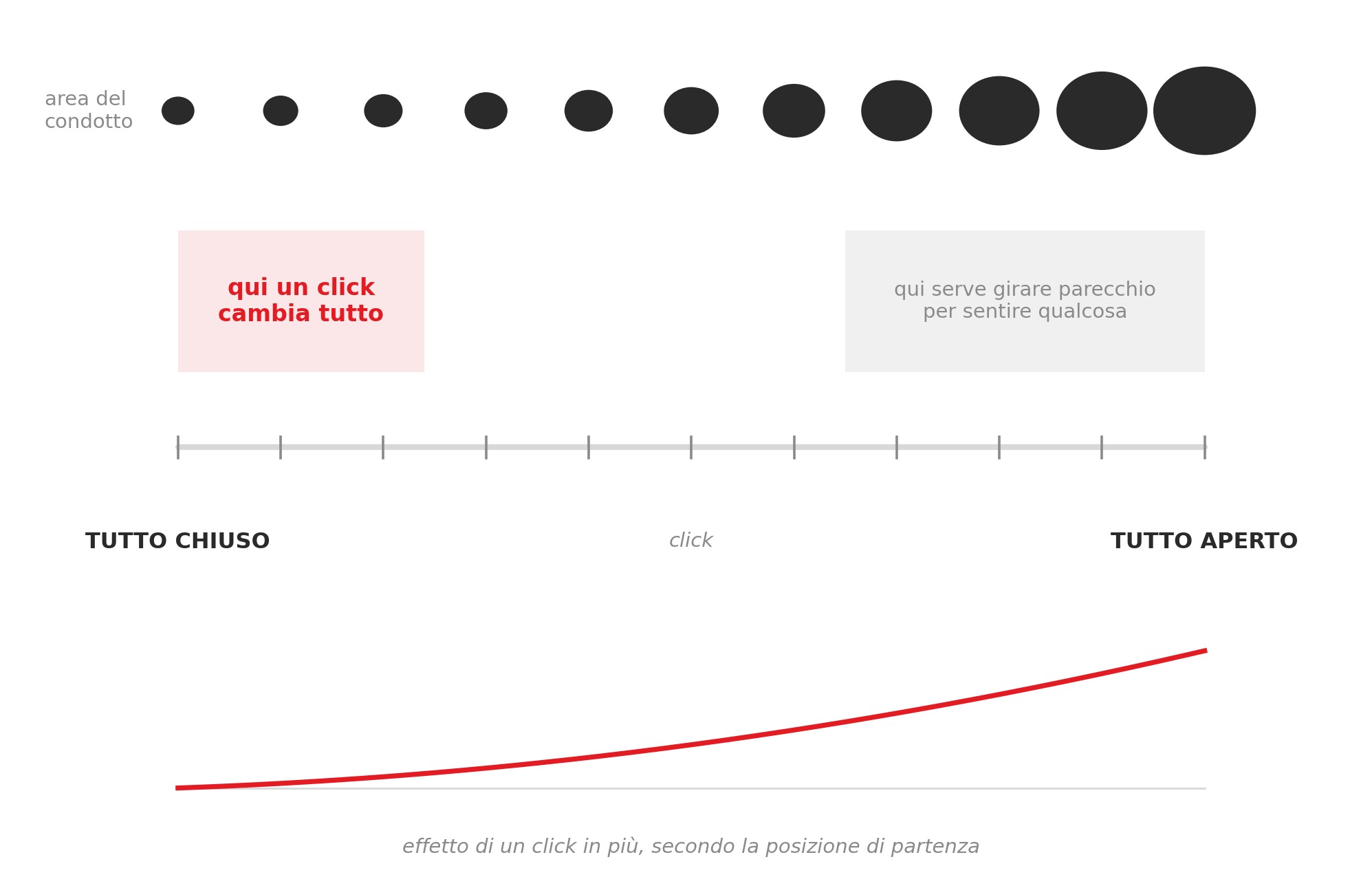
The click scale isn't linear. The adjuster physically works on a needle that narrows or widens a small oil passage: the area of that passage changes with the square of the radius, so the first clicks from fully open change very little, while the last clicks toward fully closed change a great deal. Don't be surprised if going from 10 to 8 clicks seems to do nothing, while going from 3 to 1 changes everything: that's the physics of the adjuster, not a fault in your suspension.

Run the numbers on your own bike
ClickGarage.AI works these values out from your bike's data and your real weight. Go to the calculator